
Welcome back, TMJ Insider.

This Week’s Developments
As the fourth week of the U.S.–Israeli war on Iran draws to a close, the conflict is no longer a story of momentum. It’s a story of limits. The American strategy running up against reality.
President Trump expected a quick victory. Instead, he’s hit a hard wall: Iran’s refusal to negotiate on Washington’s terms or play along with its war script. Threats to strike Iran’s energy infrastructure have already been walked back after Tehran made clear it would respond in kind, with the track record to prove it.
Washington now finds itself in unfamiliar territory: no longer in the driver’s seat, and struggling to contain the consequences of the war it ignited. Attempts to stabilize energy markets have faltered. Deadlines come and go. Pressure is mounting both regionally and domestically as global systems begin to absorb the shock.
Iran, meanwhile, holds more cards than expected. It retains underestimated advantages in key areas and continues to dictate the tempo diplomatically, while the Strait of Hormuz remains firmly under its grip. At home, Trump’s approval ratings are slipping as Americans watch a conflict that increasingly looks like it serves Israeli interests more than their own. Even within MAGA, fractures are widening between the “Israel-first” and “America-first” camps.
At the same time, White House claims that Iran’s military capacity has been “obliterated” remain hollow with each new strike on Israeli infrastructure. What was framed as an existential war to secure Israel’s survival is instead exposing it to deeper risk while eroding confidence among the very settlers its long-term project depends on.
Most critically, the war is no longer contained. It is spreading. Hezbollah is stretching Israel’s military bandwidth from South Lebanon, and Ansarallah’s entry into the fight opens a dangerous new axis near the Bab al-Mandeb, another vital chokepoint.
What was labeled a “short-term” excursion seems to be pushing Trump into a long-term quagmire, one that may ultimately redraw the boundaries of U.S. power in the region.
War shifts to infrastructure and economic targets
U.S.–Israeli strikes expanded to nuclear, industrial, and economic infrastructure.

Strikes on Natanz enrichment complex, Arak reactor, and uranium facilities
Attacks on major steel plants in Ahvaz and Isfahan
Continued strikes on residential areas, killing civilians including women and children
At least 26 were killed in Isfahan and 18 in Qom, including an entire family of nine.
Retaliation reaches new range and scale
Iran expanded its response both geographically and militarily.

First-ever strike on the U.S.–UK base at Diego Garcia
Over 80 waves of retaliatory attacks, targeting more than 55 sites
Strikes on U.S. bases across the region and Israeli cities including Dimona and Tel Aviv
Use of cluster-type warheads and continued high-frequency missile launches
Iran also reported striking Israeli aircraft, including an F-16.
Lebanon front hits highest intensity yet
Fighting in Lebanon escalated into one of the most intense phases so far.

Hezbollah launched over 100 attack waves in a single day
Destruction of over 100 Merkava tanks in recent weeks
Sustained rocket fire hitting Kiryat Shmona, Nahariya, and beyond
Continued Israeli airstrikes across Beirut and southern Lebanon, with rising casualties
Israeli officials warned the military is under growing internal strain.
Journalists targeted and killed
The war has increasingly extended to those documenting it.

Israel assassinated three Lebanese journalists in southern Lebanon after targeting their car in Jezzine
Among them was Al Mayadeen correspondent Fatima Ftouni, who had been reporting daily from the south and had recently lost family members in Israeli strikes
Also killed were Al Manar journalist Ali Choeib and photojournalist Mohammad Ftouni, Fatima’s brother and cameraman
Their killings reflect a growing pattern, from Gaza to southern Lebanon, where journalists are being targeted while documenting the war.
Silencing reporters does not erase what is happening. It only exposes it further.
Energy and trade systems under pressure
Energy and global supply chains were directly impacted.

U.S. approved a 30-day waiver on Iranian oil sanctions in an attempt to bring down prices
Iran rejected the claim that it has surplus oil waiting to be sold, saying it has no floating crude or excess supply to offer
This means the waiver is unlikely to have any real impact, as Iran has not agreed to increase supply
Iran allowed vetted vessels through the Strait of Hormuz while maintaining control
Continued attacks on oil, gas, and port infrastructure across the region
Global institutions now warn of the worst trade disruption in 80 years.
Deadlines, escalation, and mixed signals
Escalation continued alongside shifting political signals.

The U.S. set a deadline until April 6 for Iran to reopen the Strait of Hormuz
Despite this, U.S.–Israeli strikes on energy and infrastructure targets continued before that deadline, making the extension effectively meaningless
Iran warned it would irreversibly destroy regional infrastructure if attacked further
Trump announced temporary pauses while claiming talks were underway
Iran rejected negotiations without a complete and lasting end to the war
Strain begins to surface
Pressure is now visible across multiple fronts.

Israeli leadership warned forces are “on course to collapse into themselves”
U.S. troops expressed growing concern about the war
A majority of Americans now oppose U.S. military action
U.S. bases across West Asia have been heavily damaged to the point of being non-operational, with reports that troops are working remotely from makeshift locations like hotels
Global markets face inflation, energy shocks, and supply disruption
What this means
Week 4 marks a shift toward maximum pressure across every front.
Infrastructure is being targeted.
Retaliation is expanding in range.
And strain is beginning to show alongside continued escalation.
Below are some of our latest videos, interviews, and articles from the past few days that are worth your time.
Must-Watch This Week
"Any Muslim Who Doesn't Support Iran is a Traitor:" Daniel Haqiqatjou
Daniel Haqiqatjou, an American Muslim writer and public speaker also known as “The Muslim Skeptic,” joins TMJ News for a deep dive into Wahhabism and the hidden forces shaping the Iran war, exposing how sectarian division, regional complicity, and the lure of the petrodollar have fractured the Muslim world and fueled Western and Israeli dominance.
"Israel has Full Control of our Intelligence:" Lt. COL Karen Kwiatkowski
Retired U.S. Air Force Lt. Colonel Karen Kwiatkowski joins TMJ News to break down the rapidly escalating U.S.–Israel war on Iran, challenging the official narrative coming out of Washington and raising concerns about intelligence failures and strategic miscalculations. Drawing on her experience inside the Pentagon, Kwiatkowski offers a rare insider perspective on the decisions driving this conflict, warning that it risks becoming another costly and un-winnable mistake with far-reaching consequences for the U.S. and beyond.
U.S. soldier said he would be a “liability” around “caramel-colored women” if deployed to Iran.
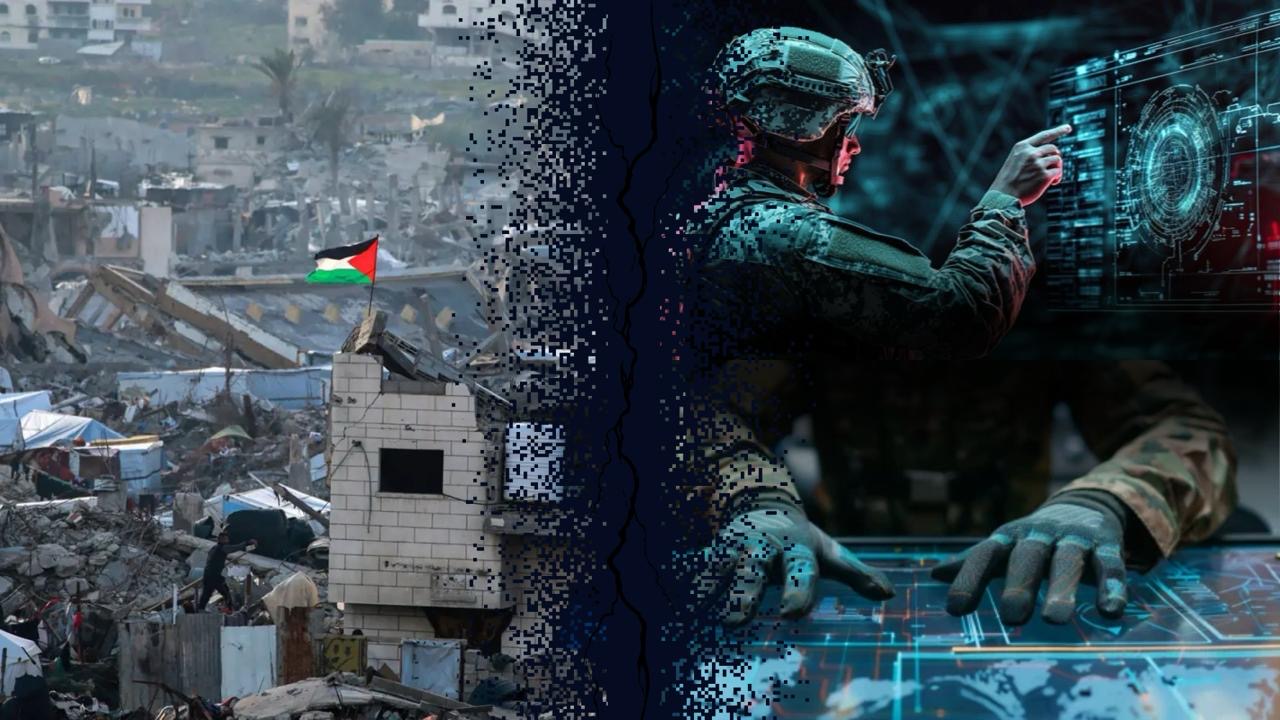
As the war continues to unfold, we’ll keep sharing daily updates across our platforms, while using this newsletter each week to step back and recap the developments that shaped the week.
Thank you for reading and for being part of the TMJ community.
ASK TMJ
Your Chance to Shape the Narrative.
Ask TMJ is your chance to engage directly with TMJ News. Submit your questions about current events, global issues, or stories you want covered.
Each week, we’ll select and answer questions in TMJ Insider, providing insights through a fearless, faith-based lens. Your voice matters — let’s explore the truth together.
Until next time,

Uncover. Resist. Empower. Journalism That Matters.
