
Welcome back, TMJ Insider.

Week 6 Recap: The War on Iran Enters a Fragile Ceasefire Phase
This week saw a ceasefire marked by increasing complexity and fragile diplomacy between Washington and Iran on one side, and escalating tensions in Lebanon on the other.
One is left with the impression that the US-Israeli alliance's efforts to exert pressure on Iran are what eventually brought Tehran to the negotiating table. Yet this is a measure taken only when all other wells remain dry. Washington would not have been forced into these negotiations if it were winning. The very act of negotiation signals compromise, each side holding cards that the other needs or wishes to limit. In Iran’s case, that card is its chokehold over the Strait of Hormuz, a strategic waterway crucial to global oil shipping. Trump’s incoherent narrative only underscores the reality: Iran is no longer a state that can be sanctioned into submission; it must be compromised with.
Iran has made clear that a ceasefire in Lebanon is a necessary condition for negotiations to be meaningful, proving that Iran sees its own sovereignty as deeply tied to the entire region. No front is left behind.
In stark contrast, the Lebanese government is largely powerless, lacking enough leverage to secure gains. Despite this, it chooses to shun Iran’s efforts, currently the only state capable of challenging US dominance, pushing for its own ceasefire talks with the Israelis. Even if the Lebanese government were to create the conditions for normalization with Israel, the single greatest obstacle would remain the Lebanese Resistance, which has shown time and again, especially in this latest round of escalations, that it is as strong and operational as ever. So much so that Israel’s original narrative, which promised to dismantle the resistance in this round, shifted to an admission that this goal is now unlikely.
Ultimately, it is the material reality on the ground, not just diplomatic overtures, that prevails. The Lebanese government has essentially traded sovereignty for a partnership with the U.S. and Israel. In this calculation, the Resistance remains the final hurdle.
Whatever emerges from this fragile ceasefire, whether a resumption of war or a temporary agreement, one reality is certain. It will mark a shift in the regional order. The U.S., once the uncontested power in West Asia, now finds itself in the uncomfortable position of having to reckon with a new geopolitical landscape. Iran is no longer a state to be sidelined; it is a player that must be engaged with seriously, and this week underscores the unmistakable truth: Washington no longer holds a monopoly on influence in the region. The days of unchallenged U.S. dominance are over.
Ceasefire announced, but violations escalate
The United States and Iran announced a two-week ceasefire, with negotiations now taking place in Pakistan. However, strikes continued almost immediately, and Lebanon was effectively excluded from the agreement.
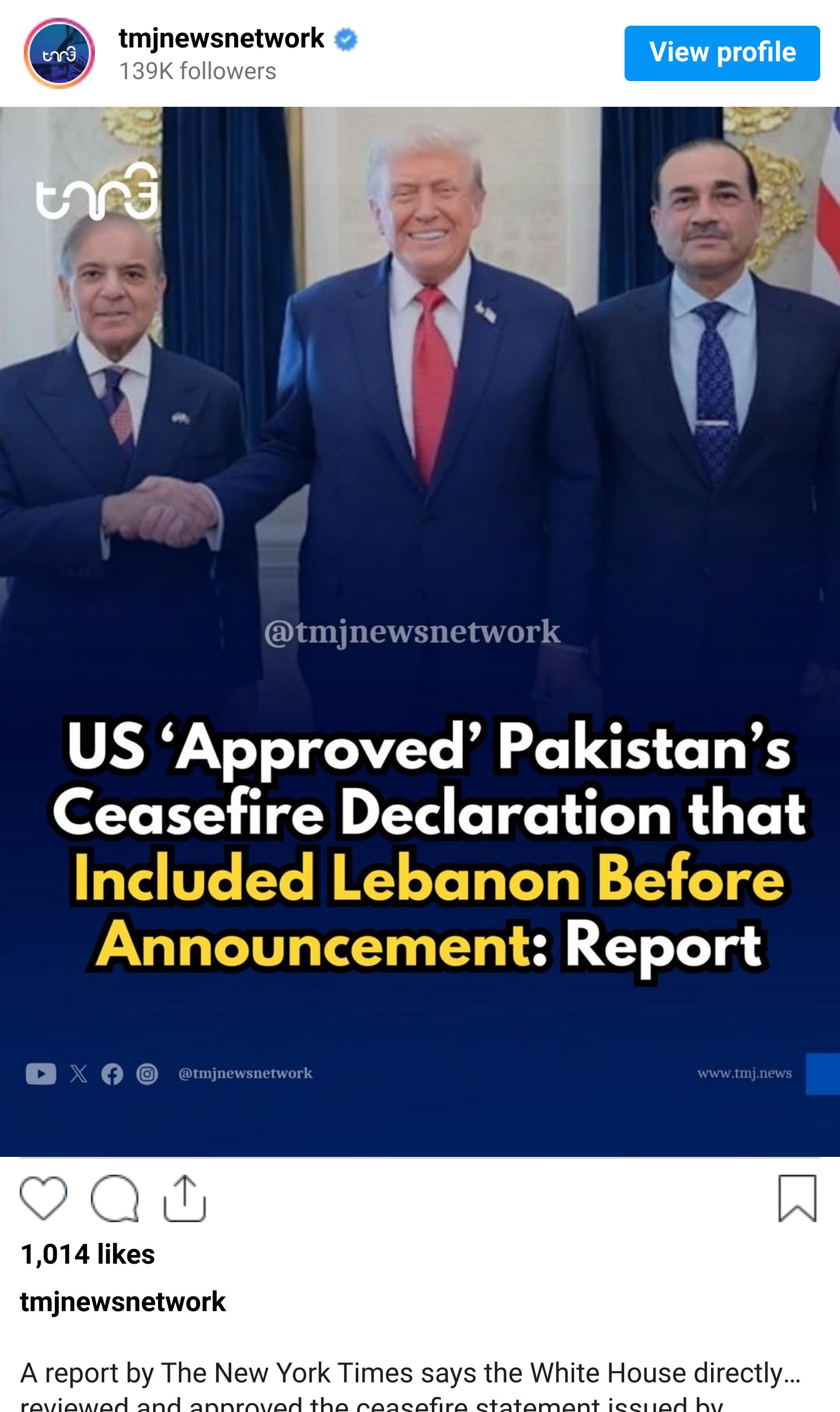
Israeli airstrikes intensified across Lebanon, with over 300 killed in a single day and more than 1,000 injured
Large-scale Israeli bombardment hit Beirut, the Bekaa, and southern regions, overwhelming hospitals and rescue teams
Iran stated that continued Israeli attacks on Lebanon constitute a violation of the ceasefire, warning that the “Resistance Front” is unified
Iran sets conditions and rejects pressure
Iran rejected U.S.-proposed ceasefire terms and instead submitted a 10-point framework outlining its conditions for ending the war.
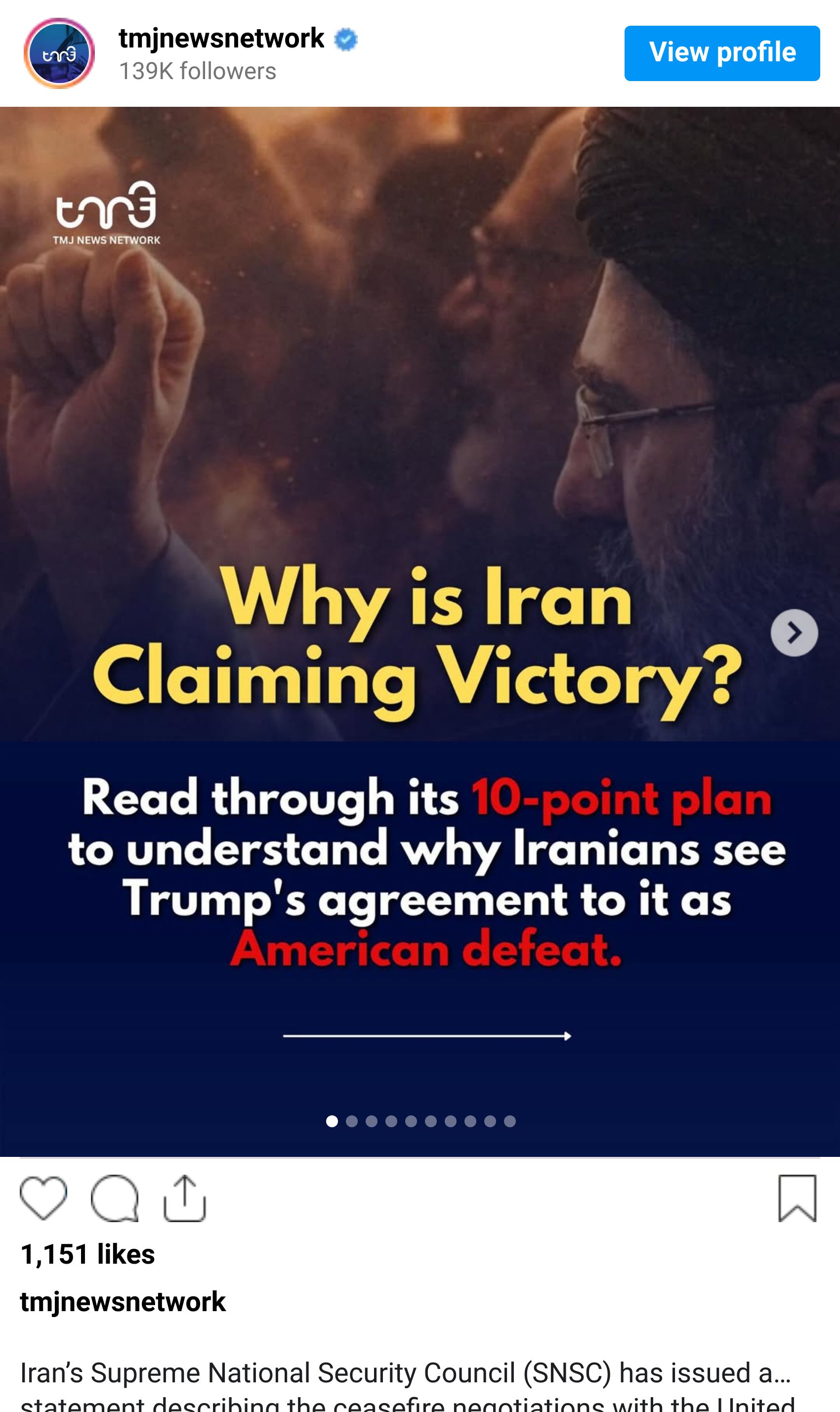
Conditions include a permanent end to hostilities, sanctions relief, financial reparations, and guarantees for navigation through the Strait of Hormuz
Iran rejected a 45-day ceasefire proposal and emphasized that negotiations cannot take place under threats

As of early Sunday morning in Pakistan (April 12, 2026), U.S. and Iranian delegations have concluded the first phase of negotiations and begun delving into “technical details,” with both sides exchanging written outlines of their key issues and proposals.
Strait of Hormuz remains under Iranian control
The Strait of Hormuz remains effectively restricted, with Iran maintaining tight control over transit.

Fewer than 10 vessels have passed through the strait since the ceasefire announcement
Despite U.S. claims that its warships transited the Strait of Hormuz today, Iran has denied this, stating that American vessels were forced to retreat after warnings from Iranian forces.
Hundreds of ships remain anchored as Iran enforces strict coordination and routing requirements
Oil prices dropped below $95 following ceasefire news but rebounded above $100 as instability continued
Energy war intensifies across the region
Strikes increasingly targeted energy infrastructure across multiple countries.

Iran targeted petrochemical complexes and refineries across Saudi Arabia, the UAE, Bahrain, and Kuwait
Major facilities linked to ExxonMobil, Chevron, and other U.S.-connected operations were hit
U.S.–Israeli strikes targeted Iran’s key energy sites, including Kharg Island, where 90% of its oil exports are processed
Retaliatory strikes continue at scale
Iran’s IRGC continued launching large-scale retaliatory operations across the region.

Strikes targeted U.S. bases, Israeli command centers, and critical infrastructure across the Gulf
Iran’s 99th and 100th waves of attacks hit more than 25 strategic targets in a single operation
Hezbollah and Ansarallah coordinated strikes with Iran, targeting Israeli positions and expanding the multi-front war
Strikes and civilian casualties rise
U.S.–Israeli strikes continued across Iran and Lebanon, with mounting civilian impact.

Strikes hit residential neighborhoods, universities, bridges, and public infrastructure across Iran
Assassinations of senior Iranian officials, including IRGC intelligence chief Majid Khademi, were reported
In Lebanon, Israeli airstrikes killed hundreds over multiple days, including attacks on residential buildings and government sites
Lebanon front becomes central
The Lebanon front has intensified significantly, with direct clashes and sustained bombardment.
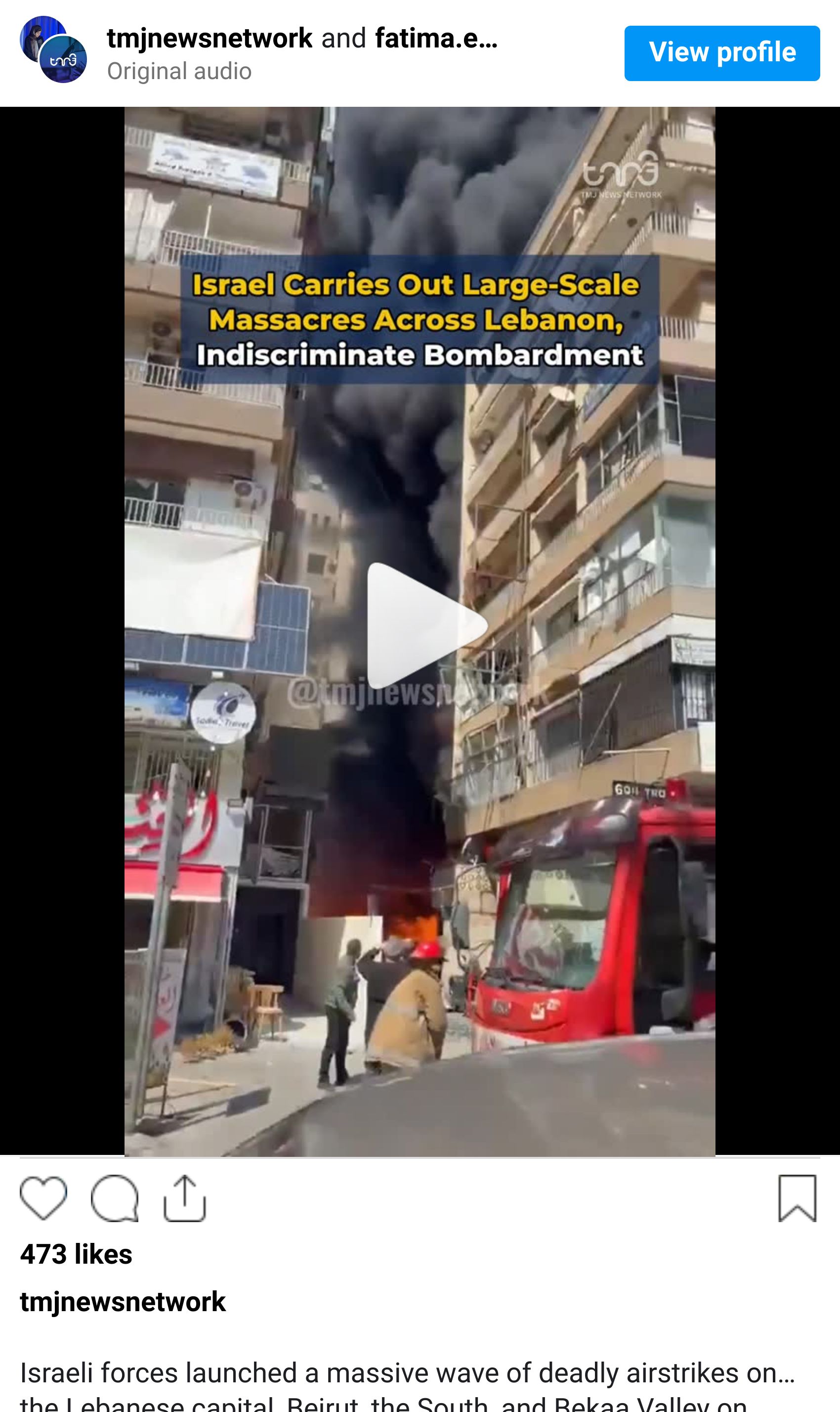
Israeli forces expanded operations across southern Lebanon while carrying out heavy airstrikes across the country
Hezbollah engaged Israeli forces in close-range fighting and launched sustained rocket and drone attacks
Israeli officials acknowledged growing strain, warning they may struggle to sustain the Lebanon campaign alongside the war on Iran
Contradictions and pressure deepen
Conflicting narratives and mounting pressure are shaping the conflict.
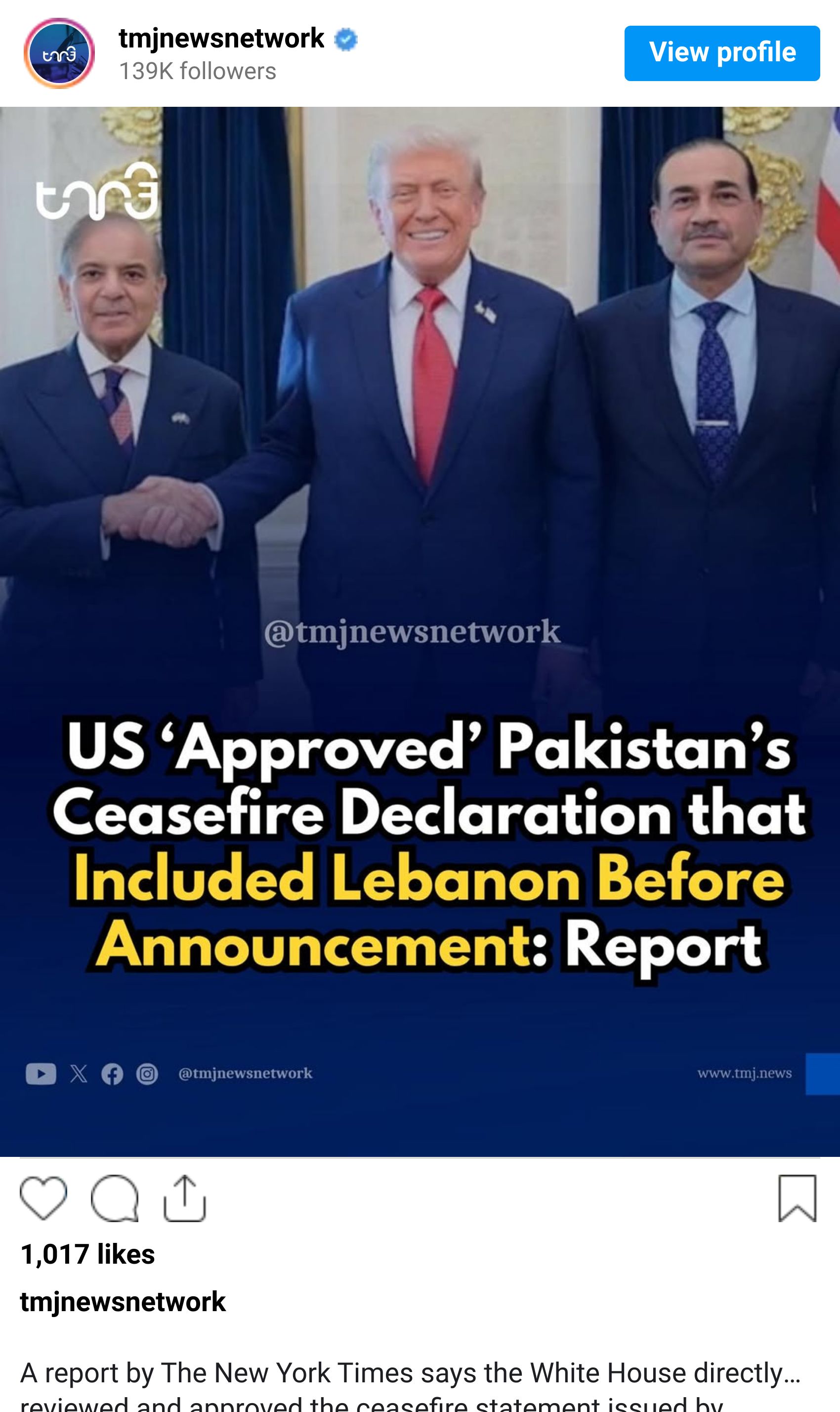
U.S. officials claimed progress toward peace, while Iran stated that no meaningful conditions have been met
Reports indicate the U.S. reversed its stance after a call between President Trump and Netanyahu, ultimately excluding Lebanon from the ceasefire framework.
Internal strain is growing within Israeli forces, while U.S. leadership faces increasing pressure as the war expands
What this means
Week 6 marks a shift into a fragile and unstable phase of the war.
A ceasefire has been announced, but the conflict continues across multiple fronts. Iran maintains control over key chokepoints, while strikes on energy infrastructure and regional escalation are extending the war’s impact beyond the battlefield.
The gap between diplomatic messaging and reality is widening as negotiations begin.
Independent Journalism is more important than ever.
Without your support, TMJ News may not survive.

Because of you, we’ve reached 51% of our $15,000 goal. Thank you to everyone who has already stepped up to support independent journalism.

At a time when the world feels more chaotic, confusing, and divided than ever, our ability to report the truth especially in this time depends on the strength of this community.
No corporations.
No political backers.
Just people who believe the public deserves honest reporting.
If you believe truth matters, consider donating and sharing the fundraiser. Your support keeps independent journalism alive.
What’s new on Patreon?
Not a Patron yet? Join the community and get weekly exclusive analysis and interviews only for our TMJ Patrons!
Here’s a sneak peek, just for you.
The former Supreme Leader Sayed Khamenei forbid the production of nuclear weapons for military purposes.
This was rooted in public interest, a principle that shaped the fatwa under specific conditions at the time. But that principle is not fixed. If the public interest changes, and if deterrence outweighs harm, the position itself can shift.
That possibility introduces a new layer to the current moment. It may be that the new Supreme Leader Sayed Mojtaba does not hold the same view, and instead sees the need for deterrence differently. In that scenario, the strategic landscape changes immediately, placing the United States in a position where options have already been exhausted, yet outcomes remain unresolved.
This is where the contradiction begins to emerge. Claims of victory may be made, but without submission, the reality on the ground does not align. A prolonged confrontation is not in Washington’s interest, and that pressure alone could force a quiet recalibration behind the scenes.
At the same time, the Israeli occupation entity remains at the forefront of escalation. Its reliance on U.S. support becomes more visible under strain, raising the question of sustainability. What was once framed as strategic leverage risks becoming a long-term burden.
…
What follows is not just escalation, but a shift in how power, influence, and necessity are calculated across the region.
The full breakdown, including what this means for the Israeli entity and how this could unfold behind closed doors, is now on Patreon.
Weekly Exclusive Analysis By Batool Subeiti
As the war continues to unfold, we’ll keep sharing daily updates across our platforms, while using this newsletter each week to step back and recap the developments that shaped the week.
Thank you for reading and for being a TMJ Insider.
ASK TMJ
Your Chance to Shape the Narrative.
Ask TMJ is your chance to engage directly with TMJ News. Submit your questions about current events, global issues, or stories you want covered.
Each week, we’ll select and answer questions in TMJ Insider, providing insights through a fearless, faith-based lens. Your voice matters — let’s explore the truth together.
Until next time,

Uncover. Resist. Empower. Journalism That Matters.
